For many Chinese singles in Sydney and Melbourne, finding a partner becomes a serious question somewhere around their thirtieth birthday. Work has settled, the visa or residency picture is clearer, friends are getting married, and the weekends still feel quiet.
Over the years, my team and I have sat down with a great many singles over 30. The question we hear most is: "Have I left it too late?" My answer: on timing, no. On method, something has to change. In your twenties you can afford to experiment. After 30, every choice carries more weight. Below I draw on several pieces of relationship research, and on what we see in consultations, to look at how to search after 30.
Start with the Australian numbers
According to the Australian Bureau of Statistics, the median age at marriage in 2024 was 32.8 for men and 31.2 for women (including remarriages). Marrying in your early thirties is completely normal in Australia.
So looking for a partner at 30 is well within the normal range. What deserves honest attention are two other things: the cost of trial and error has gone up, and how often you are chosen begins to change.
What separates 30 from 20: the cost of trial and error
In your twenties, a relationship that doesn't work out hurts for a while, and the next year brings a fresh start. There is time to learn by trying.
After 30, a serious relationship usually takes a year or two to show whether it is right: meeting, becoming exclusive, meeting each other's families, deciding which city to settle in. If you start looking seriously at 30 and hope to start a family before 35, counting backwards leaves room for only two or three attempts.
If you plan to have children, the timeline becomes more concrete. The American College of Obstetricians and Gynecologists notes that female fertility declines gradually but significantly from about 32, and more rapidly after 37. Age affects men's fertility less, but it does affect it. I share these figures to help you plan with clear eyes. There is no need to panic.
So after 30, put your effort into making each choice more accurate.
30 to 35: choosing, and being chosen
Dating runs both ways. You are choosing, and you are being chosen.
Researchers at the University of Michigan and the Santa Fe Institute analysed user data from a large dating site in New York, Boston, Chicago and Seattle (Bruch & Newman, 2018, Science Advances). The study captures strangers' first impressions from photos and profiles. Within that scope, the interest women received declined gradually with age, while men's rose until about 50. It cannot speak for every individual, but it shows a real pattern: age shapes how often you are chosen, and it affects men and women differently.
Between 30 and 35 you are in an unusual position. You are mature enough to know what you want, your career and finances are more settled, and plenty of people still want to meet you. Another study shows the other side: at first meeting, people largely agree on who is attractive, but once they know each other that agreement weakens sharply, and attraction comes more from what two people learn about each other (Eastwick & Hunt, 2014). So the best use of these years is to give more of the right people a real chance to know you. While the chance to be chosen is in your hands, don't leave it to luck.
What the research shows: a checklist only sets the range
Many people begin a serious search with a list: height, education, income, city, permanent residency. A list helps rule out people who are clearly unsuitable, and that is useful. Yet relationship research has found again and again that a list alone rarely leads to the right person.
First, what you write down is not necessarily what attracts you. In a 2008 speed-dating study, Northwestern University psychologists Eastwick and Finkel asked participants to describe their ideal partner before meeting anyone. Those stated preferences barely predicted whom they were drawn to in person.
Second, compatibility is hard to calculate in advance. In 2017, Joel and colleagues used more than 100 traits and preferences, together with machine learning, to predict desire at speed-dating events. The models could estimate who was generally popular, but could barely predict the attraction unique to a particular pair.
Third, a relationship's happiness depends mostly on how two people treat each other. In 2020, Joel and colleagues pooled 43 longitudinal studies covering 11,196 couples (PNAS). The strongest predictors of satisfaction were features of the relationship itself: perceived partner commitment, appreciation, sexual satisfaction, perceiving that the partner is satisfied, and conflict. At baseline these relationship factors explained about twice as much variance as individual traits, and once a person's own view of the relationship was known, neither partner's traits added much.
The three studies point the same way. Finding a partner takes two things: a way to rule out pairings unlikely to last, using more than a checklist, so that dates go to people more likely to suit you; and the relationship skills that help the right person stay. The first is what IDO's Relationship Matching Model does. The second is what IDO RELATE teaches.
IDO's Relationship Matching Model: practical fit and relationship patterns together
In 2021, IDO built its own Relationship Matching Model, combining years of matchmaking experience with relationship research. Every introduction is considered across four dimensions:
Practical fit
Age, height, education, income
This sets the range and checks that basic expectations line up. It defines who is in scope; the next three dimensions decide who fits.
Values
Family-oriented, achievement-oriented, soulmate
Everyone's expectations of a relationship have a main direction, which shapes what they want the relationship to bring to their life:
- Family-oriented: a stable home life matters most. Reliability and responsibility count, and children, parents and everyday care sit at the centre of life.
- Achievement-oriented: career and recognition matter most. They want a partner who is a teammate moving forward together, building a good life and willing to make trade-offs for each other's growth.
- Soulmate: emotional connection and a meeting of minds matter most. They want to be deeply understood, to talk easily, to be each other's best friend.
No direction is better than another, and most people are a mix, with one leading. Trouble starts when two people lead with different directions without realising it. A soulmate-oriented person may hope for a real conversation every evening while an achievement-oriented partner is pushing hard at work; one feels neglected, the other feels pressured. Family-oriented and achievement-oriented partners often get stuck on when to have children, or whether to move cities for a job.
Everyday disagreements about money, closeness to parents and lifestyle mostly grow from here. Research also shows that newlyweds are far more similar in values than in personality (Luo & Klohnen, 2005). So we first use a values assessment to understand your main direction, then look at whether the other person's direction fits with yours, and whether you can understand each other.
Psychologist Raymond Knee studied two beliefs about love. One is destiny: when the right person appears, everything fits. The other is growth: a good relationship is built by two people over time. People with strong destiny beliefs are quicker to decide "this isn't the one" when problems arise, and to leave (Knee, 1998). So those seeking a soulmate especially benefit from knowing that a soulmate connection is usually worked out together, and rarely fits perfectly from the first meeting.
Attachment style
How you show love, how you handle disagreement
Attachment theory describes adult patterns in close relationships as secure, anxious or avoidant, among others. In the study of 11,196 couples, a person's own attachment anxiety and avoidance were among the most important individual predictors of their own satisfaction. When one person needs a lot of reassurance and the other pulls away when pressed, the pair can easily fall into a pursue-and-withdraw cycle. So we look at each person's pattern, and at how the two patterns are likely to interact.
Life path
City, career, family plans
Especially important for Chinese singles abroad: visa and residency, staying in Australia or moving home, whether and when to have children. However well two people click, they will struggle if their lives are heading in different directions.
Practical fit can be screened from a profile. The other three dimensions need conversation and assessment. When you join, your consultant holds an in-depth interview about your background, past relationships and plans, and uses values and attachment assessments to understand your relationship patterns. Each introduction weighs all four dimensions together, and a date is arranged only when both people agree.
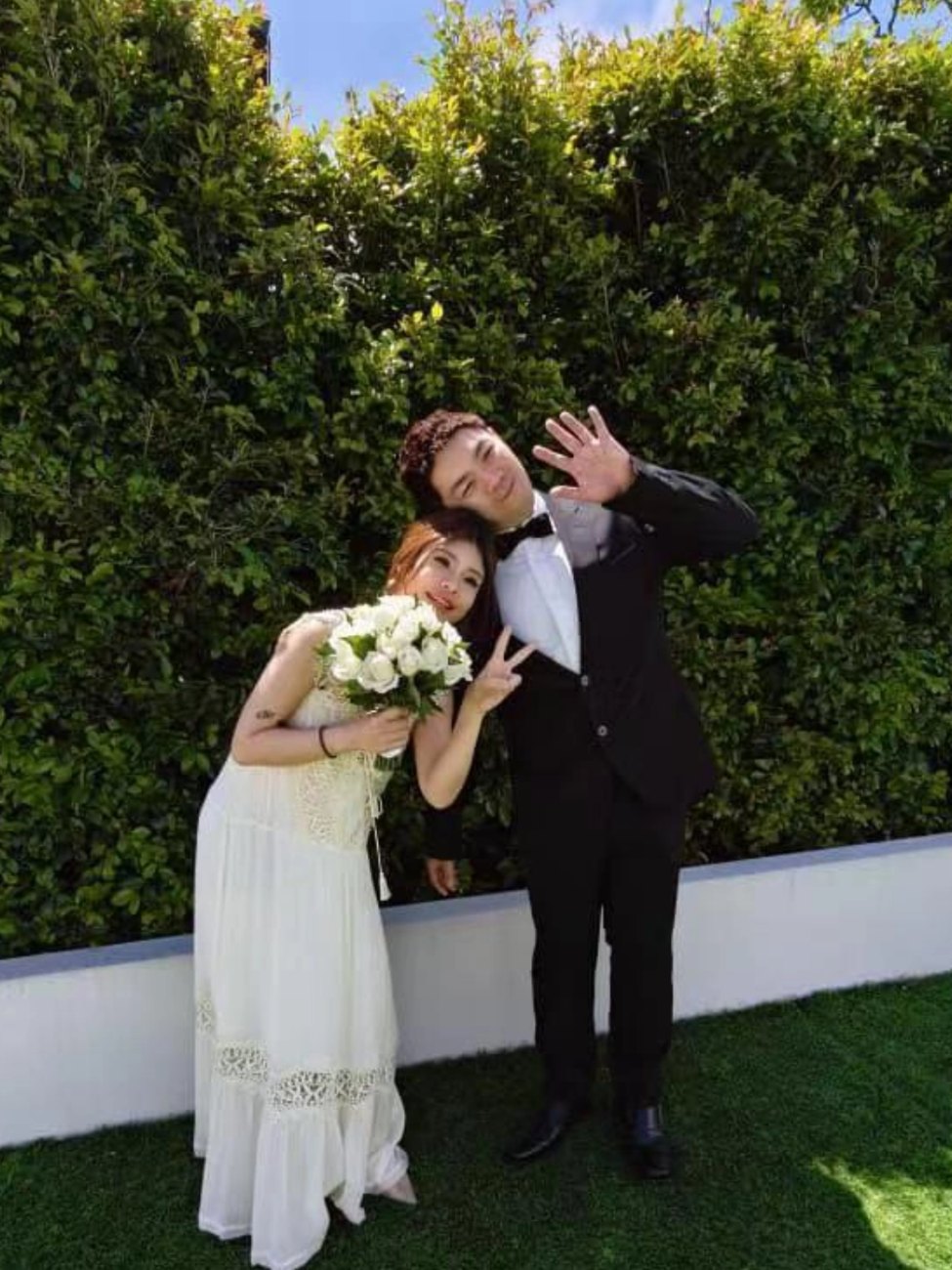
The aim is to spend your limited time on people who are more likely to suit you. One IDO couple went from first meeting to wedding in 92 days.
IDO RELATE: learn to relate before you're in a relationship
The matching model addresses whom you meet. But the 43-study analysis tells us that whether a relationship thrives depends largely on how two people relate: expressing appreciation, showing commitment, repairing after an argument. These are skills, and skills can be learned.
Marriage researcher John Gottman spent decades observing couples and found that stable couples keep a ratio of roughly five positive interactions to every negative one, even during conflict. They argue too, but while they argue they still affirm each other, ease the tension and repair quickly.
Attachment patterns can change as well. Through stable, supportive relationships and reflection on their own history, people can become more secure over time, a pattern psychologists call earned security.
Most singles over 30 have had a few relationships, and often carry patterns that repeat: being drawn to the same type, holding back the truth when they like someone, getting stuck at the same stage. Learning relationship skills while single costs the least. You don't have to learn by getting hurt inside a real relationship, and when the right person appears you already know how to build something good. It also makes a real difference to the cost of trial and error.
IDO RELATE™ is a 12-session relationship course we designed for Chinese singles abroad. It combines relationship science, NLP tools and real IDO dating cases, and follows the five stages of finding a partner:
- ClaritySeparate what excites you from what you actually need
- ChoosingRead interest accurately and judge fit
- First datesTalk naturally and show who you are
- Moving forwardExpress interest and step out of ambiguity
- BuildingHandle disagreement and create a steady way of being together
The course runs alongside one-to-one relationship coaching. What you learn in class is put to use on real dates, then reviewed with your consultant afterwards. See IDO RELATE for details.
Make the most of today: three things to start now
1. Re-rank your criteria. Write down everything you want in a partner, then circle only three true deal-breakers. Put more thought into values, how you relate and where life is heading: how do you hope a partner treats money and family? How much reassurance do you need? Which city do you want to live in five years from now?
2. Set a steady rhythm. Psychology's mere exposure effect shows that people tend to like what they encounter repeatedly. So someone you didn't dislike, but didn't feel a spark with, may be worth a second or third meeting. Keep the rhythm steady too: two or three chances to meet new people every month for six months works better than one intense month now and then.
3. Reflect after every date. Don't just note whether there was a spark. Ask three questions: Did our values clash anywhere obvious? Did I feel relaxed or tense with this person? Did I express myself well this time? The answers show you what to adjust next.
How IDO can help
IDO offers one-to-one relationship coaching for singles. Our matchmaking consultants work from relationship psychology and relationship science, and stay with you through the whole search:
- Meeting the right people: after an in-depth consultation, introductions follow the Relationship Matching Model, and a date happens only when both agree; matches across cities and countries, starting with a video call
- Learning to relate well: the IDO RELATE course, with your consultant reviewing each date with you
- Meeting with confidence: identity verification and a signed single declaration for every member, plus monthly events in each city, including Sydney and Melbourne. Consultations at our office or on Zoom, booked 24 hours ahead, evenings and weekends available
To learn about services in your city, see Sydney and Melbourne.
A final word
The real loss after 30 is spending years on the same trial and error. Know yourself well, choose with a scientific method, and build your relationship skills while you are single, These years after 30 deserve that kind of care. If you'd like to talk through your own situation first, book a one-to-one consultation.
Frequently asked questions
Is 30 too late to look for a partner in Australia?
According to the ABS, the median age at marriage in Australia in 2024 was 32.8 for men and 31.2 for women (including remarriages), so 30 is a normal time to be looking. The difference is that trial and error costs more: a serious relationship can take a year or two to assess, so each choice needs to be more accurate.
Why does choosing a partner by a checklist so often fail?
Research shows that the preferences people write down in advance barely predict whom they are attracted to in person, and an analysis of 43 studies and 11,196 couples found that satisfaction depends mainly on how two people treat each other, with each partner's individual traits adding little. A checklist is useful for setting a range; fit depends on values, attachment style and life direction.
What does IDO's Relationship Matching Model look at?
IDO built its Relationship Matching Model in 2021. Each introduction is considered across four dimensions: practical fit (age, height, education, income), values (family-oriented, achievement-oriented or soulmate), attachment style (how you show love and handle disagreement) and life path (city, career, family plans). A date is arranged only when both people agree.
Is a relationship course worth taking while single?
Yes. Whether a relationship lasts depends heavily on skills such as expressing appreciation, showing commitment and handling disagreement, and these can be learned. Learning them while single costs the least and reduces repeated trial and error. IDO RELATE™ is a 12-session course combining relationship science, NLP tools and real cases, supported by one-to-one coaching.
Where in Australia does IDO operate, and how do I start?
IDO has offices in Sydney and Melbourne. Consultations are held at the office or on Zoom, booked at least 24 hours ahead, with evenings and weekends available. Every city has member events each month, and we can match across cities and countries. Book a one-to-one consultation on our website to begin.
References
- Australian Bureau of Statistics. Marriages and Divorces, Australia, 2024.
- American College of Obstetricians and Gynecologists. Female Age-Related Fertility Decline. Committee Opinion No. 589, 2014.
- Bruch, E. E., & Newman, M. E. J. (2018). Aspirational pursuit of mates in online dating markets. Science Advances, 4(8), eaap9815.
- Eastwick, P. W., & Hunt, L. L. (2014). Relational mate value: Consensus and uniqueness in romantic evaluations. Journal of Personality and Social Psychology, 106(5), 728–751.
- Eastwick, P. W., & Finkel, E. J. (2008). Sex differences in mate preferences revisited: Do people know what they initially desire in a romantic partner? Journal of Personality and Social Psychology, 94(2), 245–264.
- Joel, S., Eastwick, P. W., & Finkel, E. J. (2017). Is romantic desire predictable? Machine learning applied to initial romantic attraction. Psychological Science, 28(10), 1478–1489.
- Joel, S., et al. (2020). Machine learning uncovers the most robust self-report predictors of relationship quality across 43 longitudinal couples studies. PNAS, 117(32), 19061–19071.
- Knee, C. R. (1998). Implicit theories of relationships: Assessment and association with romantic relationship initiation, coping, and longevity. Journal of Personality and Social Psychology, 74(2), 360–370.
- Luo, S., & Klohnen, E. C. (2005). Assortative mating and marital quality in newlyweds: A couple-centered approach. Journal of Personality and Social Psychology, 88(2), 304–326.
- Hazan, C., & Shaver, P. (1987). Romantic love conceptualized as an attachment process. Journal of Personality and Social Psychology, 52(3), 511–524.
- Roisman, G. I., Padrón, E., Sroufe, L. A., & Egeland, B. (2002). Earned-secure attachment status in retrospect and prospect. Child Development, 73(4), 1204–1219.
- Gottman, J. M. (1994). What Predicts Divorce? Lawrence Erlbaum Associates.
- Zajonc, R. B. (1968). Attitudinal effects of mere exposure. Journal of Personality and Social Psychology, 9(2, Pt.2), 1–27.